“I just reached out to stop myself from falling and that one moment changed everything.”
It happens in a split second. A stumble on the stairs, a wet floor at the market, or a misstep during your morning walk. You reach out instinctively to break the fall and instead, your wrist breaks. Wrist fractures are among the most common bone injuries treated by orthopaedic surgeons in Navi Mumbai, affecting people of all ages, from young athletes to elderly adults.
While a wrist fracture may seem minor at first, without proper wrist fracture treatment in Navi Mumbai it can lead to lasting pain, stiffness, weak grip strength, and even permanent deformity. The good news? With the right expert care, most patients make a full recovery and return confidently to daily life. This guide walks you through everything from types and symptoms to treatment options, recovery, and how Dr. Suyog Chavhan at Vashi, Navi Mumbai can help you heal faster and stronger.
What Is a Wrist Fracture?
A wrist fracture is a break in one or more of the bones that form the wrist joint. The most commonly injured bone is the radius — specifically its distal end closest to the wrist resulting in what is called a distal radius fracture. Other structures that can be involved include the ulna (the second forearm bone) and the carpal bones, which sit between the forearm and the fingers.
Seeking timely fracture treatment in Navi Mumbai is essential the sooner the injury is assessed, the better the outcome.
Common types of wrist fractures include:
- Colles Fracture — the most common type, where the broken end of the radius tilts upward. Typically caused by falling on an outstretched hand.
- Smith’s Fracture — the reverse of a Colles fracture, where the bone tilts downward. Usually caused by a fall on a flexed wrist.
- Scaphoid Fracture — a break in the scaphoid carpal bone, often missed on early X-rays. Persistent tenderness in the anatomical snuffbox after a fall is a key warning sign.
- Intra-articular Fracture — the break extends into the joint surface itself, making precise restoration essential.
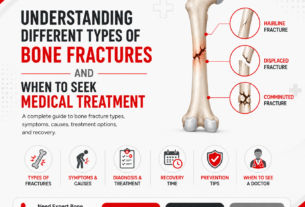
- Comminuted Fracture — the bone shatters into multiple fragments, typically requiring surgical repair.
Identifying the exact fracture type and severity is critical for choosing the right treatment. Dr. Suyog Chavhan uses advanced imaging alongside a thorough clinical examination to diagnose your injury accurately before recommending any course of action.
Signs and Symptoms of a Wrist Fracture
After a fall or wrist injury, watch for these signs:
- Immediate, intense pain at the wrist
- Swelling and tenderness around the wrist and hand
- Visible deformity the wrist may appear bent or misshapen
- Bruising developing within hours of the injury
- Difficulty or inability to move the wrist, fingers, or thumb
- Numbness or tingling in the fingers, which may suggest nerve involvement
- Loss of grip strength or inability to bear weight through the wrist
Important: Not all wrist fractures present dramatically. A scaphoid fracture may only cause mild pain and slight swelling. If wrist pain does not improve within 24–48 hours after a fall, always get an X-ray do not wait.
Who Is Most at Risk of a Wrist Fracture?
Wrist fractures can happen to anyone, but certain groups are particularly vulnerable especially in the Navi Mumbai setting:
- Older adults (especially post-menopausal women) — reduced bone density due to osteoporosis significantly raises fracture risk
- Children and teenagers — active play and sports make falls very common
- Athletes — cricket, football, cycling, and gym training all carry impact and fall risk
- People with osteoporosis or low bone density
- Workers in physically demanding roles — construction workers, delivery riders, field workers
- Road accident victims — given Navi Mumbai’s busy two-wheeler traffic, crowded local trains, and uneven pavements, wrist fractures from falls and collisions are extremely common
Dr. Suyog Chavhan’s clinic in Vashi treats patients across all age groups, making it one of the most accessible and trusted destinations for wrist fracture treatment in Navi Mumbai.
Wrist Fracture Treatment Options in Navi Mumbai
The right fracture treatment in Navi Mumbai depends on the fracture type and severity, whether bones are displaced, the patient’s age and activity level, and overall bone health. Here is a complete overview:
1. Non-Surgical Treatment (Conservative Management)
For stable, non-displaced fractures where bones remain properly aligned, non-surgical treatment is often highly effective:
- Plaster Cast or Splint: The wrist is immobilised for 4 to 8 weeks, allowing the bone to heal naturally in the correct position.
- Closed Reduction: If bones are mildly misaligned, the doctor manually repositions them under local anaesthesia, then applies a cast to hold the correction.
- Regular X-ray Monitoring: Follow-up X-rays every 1–2 weeks confirm the bones are healing correctly and have not shifted.
2. Surgical Treatment
When the fracture is unstable, severely displaced, or involves the joint surface, surgical fracture treatment in Navi Mumbai offers the best long-term results:
- K-Wire Fixation (Percutaneous Pinning): Thin metal wires inserted through the skin hold fractured bones in position a minimally invasive option, usually removed after 4–6 weeks.
- Open Reduction and Internal Fixation (ORIF): A small incision is made, bones are realigned, and a metal plate with screws provides stable fixation enabling earlier wrist movement and better functional outcomes.
- External Fixation: A frame attached to pins above and below the fracture is used for complex, badly shattered cases where internal fixation is not possible.
- Bone Grafting: Used when significant bone loss exists, graft material fills gaps and stimulates regeneration.
Recovery Timeline After Wrist Fracture Treatment
Week 1–2: Pain and swelling managed with medication and ice therapy. Wrist immobilised in cast or post-surgical dressing. Finger movement exercises encouraged to prevent stiffness.
Week 3–6: First follow-up X-ray to confirm healing. Cast adjusted as needed; gentle wrist physiotherapy begins. Light finger-based daily activities usually possible.
Week 6–12: Cast or fixation typically removed (non-surgical cases). Active physiotherapy focuses on restoring range of motion, grip strength, and coordination. Most patients return to desk work. Driving after medical clearance.
3 to 6 Months: Near-complete recovery for most patients with consistent physiotherapy. Return to sports and full physical activity. Grip strength fully restored; bone remodelling continues for up to one year.
Dr. Suyog Chavhan’s Rapid Recovery Protocol means less post-operative pain, earlier physiotherapy, and a faster return to normal life compared to traditional approaches.
Risks of Untreated or Poorly Managed Wrist Fractures
Ignoring or inadequately treating a wrist fracture can lead to serious long-term consequences:
- Malunion: Bone heals in a deformed position, causing permanent weakness and restricted movement
- Non-union: The bone fails to heal entirely, requiring more complex surgery later
- Post-traumatic arthritis: Chronic pain and stiffness in the wrist joint
- Carpal Tunnel Syndrome: Median nerve compression from mal-aligned bone or scar tissue
- Tendon Rupture: Sharp bone edges can damage nearby tendons in neglected cases
- Complex Regional Pain Syndrome (CRPS): A rare but severely debilitating pain condition
Early and accurate wrist fracture treatment in Navi Mumbai is always the best course of action. Do not delay visit an orthopaedic specialist in Navi Mumbai as soon as possible after any wrist injury.
Why Choose Dr. Suyog Chavhan for Wrist Fracture Treatment in Navi Mumbai?
- Internationally Trained: MCh Fellowship in Hip & Knee Replacement (England, UK) and Complex Trauma Fellowship (Seoul, South Korea)
- Minimally Invasive Techniques: Smaller incisions, less pain, faster recovery
- Rapid Recovery Protocol: Earlier mobilisation and superior functional outcomes
- Patient-Centred Care: Regular follow-ups, clear communication, and fully personalised treatment plans
- Trusted by Hundreds of Patients: Consistently positive outcomes across all age groups and fracture types
Book Your Consultation with Dr. Suyog Chavhan Today
Don’t let a wrist fracture hold you back. Early treatment means faster healing, stronger grip, and a full return to daily life. Dr. Suyog Chavhan is one of Navi Mumbai’s most trusted orthopaedic surgeons, practicing at Kokilaben Hospital, MGM Hospital Vashi, PKC Hospital, and more.