Have you ever experienced knee locking while walking, climbing stairs, or getting up from a chair? Your knee may suddenly catch, feel stuck, or seem as though it might buckle. Sometimes the sensation passes within seconds, but repeated episodes can make everyday movements uncomfortable or leave you unsure about what to do.
Occasional knee clicking is not always a cause for concern. However, repeated locking or a feeling that your knee may give way deserves attention, especially when it affects your movement.
So, what could be causing these symptoms, and when should you consider getting your knee checked?
Is Your Knee Locking, Stiff, or Giving Way?
Though easily confused, these two clinical terms point to distinctly different physical experiences.
- Locking occurs when the knee joint physically jams or freezes, preventing you from regular bending or straightening.
- Giving way, by contrast, refers to a sudden sensation of instability where the joint feels incapable of bearing your body weight.
- Stiffness: Your knee feels difficult to move, particularly after sitting for a long time or first getting out of bed.
Sometimes, pain and swelling can restrict movement. In other cases, a problem within the joint may cause a mechanical blockage. Paying attention to what you feel, when it happens, and whether pain accompanies it can help a healthcare professional investigate the cause.
What Causes Knee Locking and Instability?
Several conditions can affect the way your knee moves. Although symptoms may overlap, understanding the possible causes can help you recognise when an assessment may be useful.
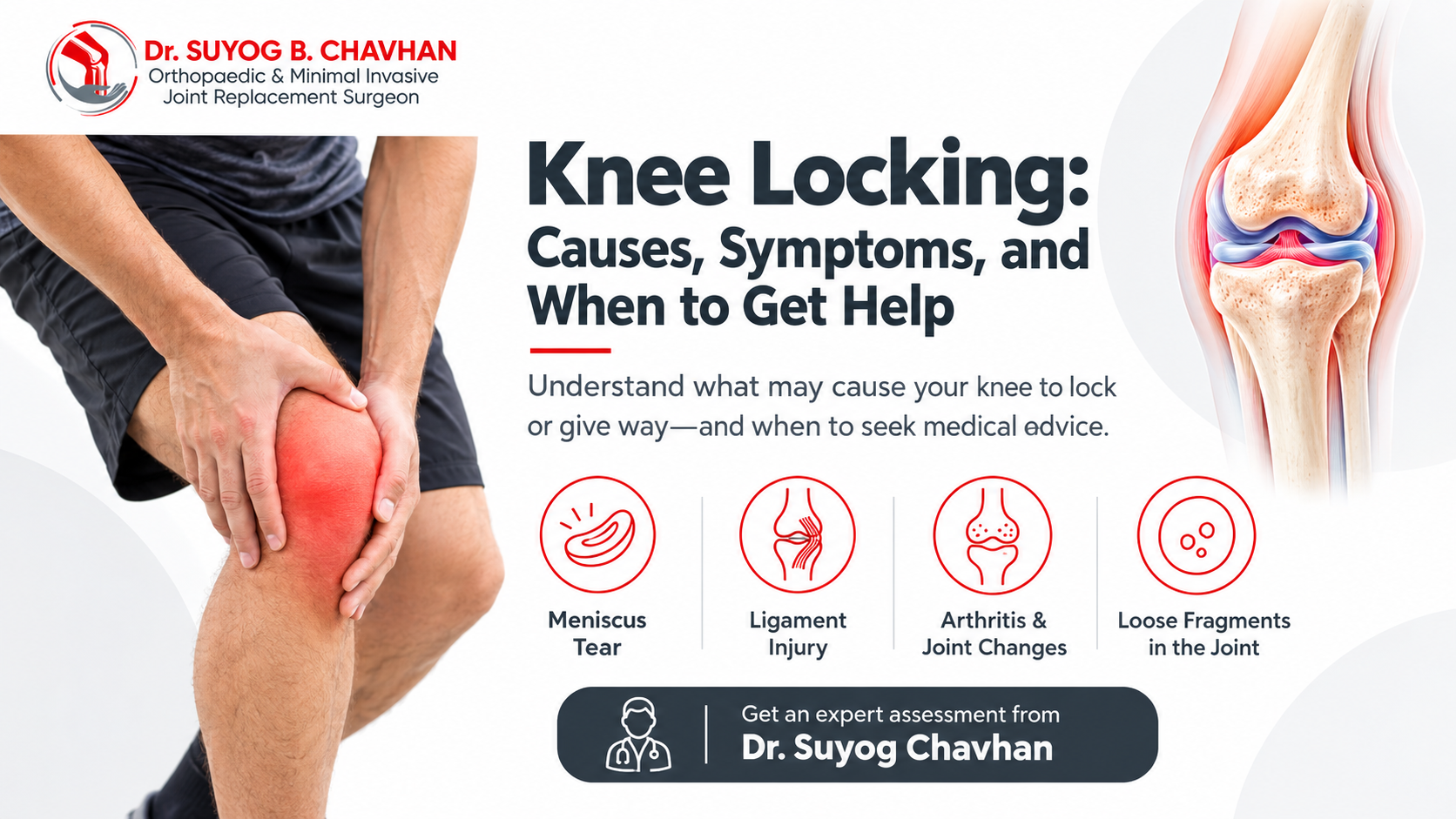
1. A Meniscus Tear
The meniscus acts as a shock-absorbing cartilage pad within the knee. It can tear during a sudden twisting movement, while playing sports, or through gradual age-related changes.
A tear can trigger inflammation, discomfort, a catching sensation, or trouble fully extending the leg. Some tears cause mechanical locking, although not everyone with a meniscus injury experiences this symptom.
2. Ligament Injuries
Ligaments help stabilise your knee during movement. An injury may happen when you change direction suddenly, land awkwardly, or twist your knee.
You might notice that your knee feels unreliable when walking, turning, or using stairs. Pain and swelling may also occur. If the symptoms began after a sudden injury, avoid returning to sports until you have received appropriate advice.
3. Arthritis and Joint Changes
Does your knee feel stiff when you stand up after sitting for a while? Arthritis can also drive joint stiffness, soreness, and limited mobility, especially after you rest for a while.
However, a knee that becomes physically stuck should not automatically be attributed to arthritis. Other causes may need to be investigated, especially if the problem develops suddenly.
4. Loose Fragments Inside the Joint
Occasionally, a small fragment of bone or cartilage can move within the joint and interfere with normal movement. This condition can generate sudden catching or the feeling that an obstruction is blocking your joint.
The symptoms alone cannot confirm this problem. A clinical examination and, where appropriate, imaging can help identify the likely cause.
What Steps Should You Take If Your Knee Locks Up?
Your first reaction might be to straighten your leg quickly or keep moving until the sensation passes. However, forcing the joint can worsen discomfort.
Here are some safer steps to consider:
- Pause the activity: Stop walking or exercising if the knee catches or feels unstable.
- Avoid forcing movement: Do not twist your knee or try to push it through a painful blockage.
- Reduce the risk of falling: Avoid running, jumping, and sudden changes of direction while your knee feels unreliable.
- Notice the pattern: Remember whether the problem occurs during walking, after sitting, or following an injury.
- Seek an assessment if it recurs: Repeated locking or buckling deserves attention, even if the symptoms settle between episodes.
Seek urgent medical care if your knee becomes stuck and will not move normally, you cannot bear weight after an injury, or you develop significant swelling or visible deformity. A hot, red knee accompanied by fever also requires immediate assessment.
When Should You Consult an Orthopaedic Doctor?
Occasional knee stiffness may not indicate a serious problem, but repeated symptoms deserve attention.
If your knee catches, feels unstable, or makes daily activities difficult, consult Dr. Suyog Chavhan for guidance. An assessment may include your medical history, knee movement, tenderness, and stability, with an X-ray or MRI if needed.
Some knee conditions improve with activity adjustments and supervised rehabilitation, while certain injuries or mechanical blockages may require further treatment. Knee locking does not automatically mean you need surgery.
If knee symptoms begin after an injury, read more about sports injury treatment in Navi Mumbai to understand the available assessment and care options.
Why Is the Right Assessment Important?
Knee locking, catching, or instability can interfere with everyday activities. These symptoms may be linked to meniscus tears, ligament injuries, arthritis, or loose fragments, so identifying the underlying cause is important.
If knee symptoms persist or affect your daily routine, an orthopaedic evaluation can help determine the cause and guide appropriate treatment. For more information about orthopaedic care, visit Dr. Suyog Chavhan’s official website.
Frequently Asked Questions
1. Can knee locking fix itself over time?
Temporary stiffness or catching may settle, but repeated locking or difficulty moving the knee should be assessed to identify the underlying cause.
2. Why does my knee suddenly give way when I walk?
Knee buckling may be associated with ligament injuries, pain-related muscle weakness, or other problems affecting stability. A medical assessment may help identify the root cause.
3. Does a meniscus tear always trigger knee locking?
No. A meniscus tear may cause pain, swelling, or catching, but symptoms vary. Some tears do not cause mechanical locking.
4. Should I exercise if my knee feels unstable?
Avoid activities that cause buckling or increase your risk of falling. A healthcare professional can advise you on appropriate activity and rehabilitation.
5. Does knee locking always require surgery?
No. Treatment depends on the cause and severity. Some conditions can be managed without surgery, while certain injuries or mechanical blockages may require a procedure.