What Is a Bone Fracture?
A bone fracture is a break or crack in a bone caused when more force is applied than the bone can withstand. The terms “fracture” and “broken bone” mean exactly the same thing. Fractures range from a thin hairline crack to a complete shatter into multiple pieces. No matter how minor a fracture appears, it always requires proper diagnosis and Bone Fracture Treatment in Navi Mumbai to heal correctly and prevent future complications.
Causes of Bone Fractures
Bone fractures can occur for a variety of reasons. Understanding the cause helps in both treatment and prevention.
Falls: Slipping on a wet floor, falling from a height, or losing balance especially in elderly individuals with weaker bones is one of the leading causes of fractures across Navi Mumbai.
Sports Injuries: High-impact sports like football, cricket, and kabaddi place significant stress on bones. Sudden twists, collisions, or awkward landings frequently result in fractures.
Road Accidents: Vehicular accidents are a major cause of complex and compound fractures, particularly in high-traffic areas of Navi Mumbai such as Vashi, Kharghar, and Panvel.
Osteoporosis: This condition gradually weakens bones, making them fragile and prone to fractures even from minor falls or everyday movements. It is especially common in post-menopausal women and older adults.
Repetitive Stress: Athletes, runners, soldiers, and people in physically demanding jobs often develop stress fractures due to repeated strain on bones over time without adequate rest.
Workplace Injuries: Construction workers, factory employees, and manual labourers in areas like Belapur and Nerul are at a higher risk of fractures due to heavy lifting, equipment accidents, or falls at the worksite.
Common Types of Bone Fractures
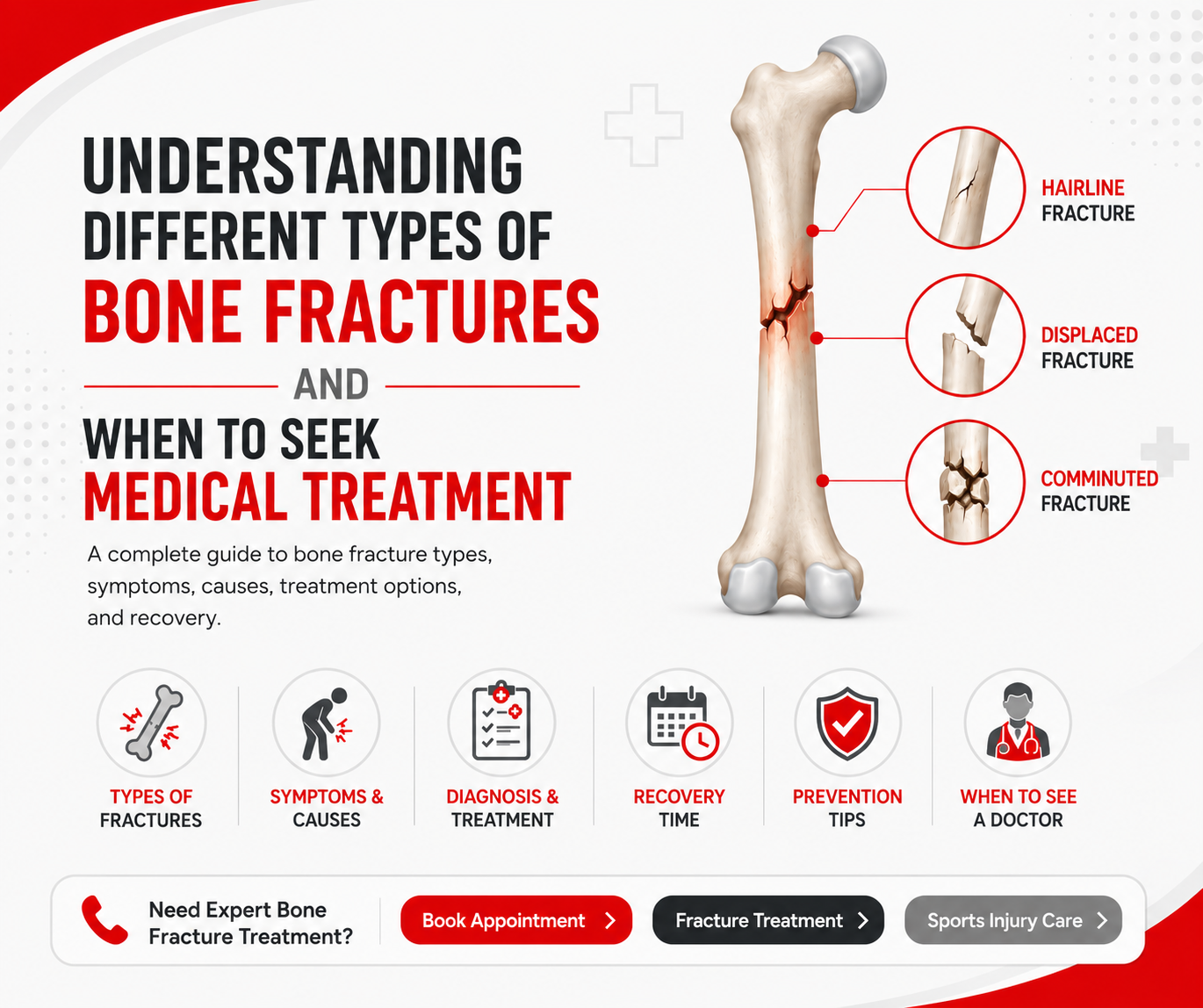
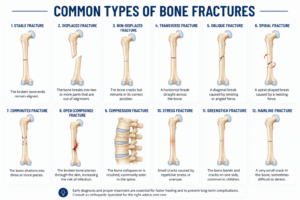
Identifying the fracture type is essential for determining the right course of Bone Fracture Treatment in Navi Mumbai. Here is a comprehensive look at all major types:
- Stable Fracture The broken bone ends remain aligned and barely displaced. This is the least complex type and typically heals well with casting and rest. Pain and mild swelling are common, with no visible deformity.
- Displaced Fracture The bone breaks into two or more parts that move out of alignment. This usually requires surgical intervention to realign and stabilise the bone using plates or screws.
- Non-Displaced Fracture The bone cracks partially or fully but stays in its correct anatomical position. It is often treated non-surgically with immobilisation and rest.
- Transverse Fracture A horizontal break straight across the bone shaft, usually caused by a direct blow or sharp impact. Treatment depends on displacement minor cases use casting, while severe cases may need surgery.
- Oblique Fracture This diagonal fracture is typically caused by a twisting force or angular impact. Symptoms include pain, swelling, and visible deformity. Treatment ranges from bracing to surgical fixation with rods or screws.
- Spiral Fracture Caused by a rotational or twisting force, the fracture line spirals around the bone shaft. It is common in contact sports and road accidents. Surgical fixation is often required for proper alignment.
- Comminuted Fracture The bone shatters into three or more fragments, typically from high-energy trauma such as a road accident or heavy fall. This almost always requires surgery and an extended recovery period.
- Open (Compound) Fracture A medical emergency where the broken bone pierces through the skin, creating a high risk of infection. Immediate wound cleaning and urgent surgery are critical. Anyone experiencing this should seek Bone Fracture Treatment in Navi Mumbai without any delay.
- Compression Fracture Common in the spine, this occurs when a vertebra collapses under pressure frequently linked to osteoporosis or high-impact falls. It causes significant back pain and may require bracing or, in severe cases, surgical intervention.
- Stress Fracture A tiny crack that develops gradually from repetitive strain, common in runners and athletes. Pain builds slowly and worsens with activity. Early diagnosis is essential to prevent a complete break.
- Greenstick Fracture Seen primarily in children, the bone bends and partially breaks without fully snapping. It is less severe but still requires proper immobilisation to heal correctly.
- Hairline Fracture A thin crack that may not be visible on a standard X-ray initially. Often caused by overuse, it can be easily missed without a specialist evaluation.
Fracture Type at a Glance
Recognising the SymptomsEarly identification of a fracture prevents serious complications. Common symptoms include:
With stress and hairline fractures, symptoms can be subtle a dull, persistent ache that worsens with activity. Never ignore pain that does not resolve with rest. When Should You Seek Medical Treatment?Certain signs demand immediate attention. You should seek Bone Fracture Treatment in Navi Mumbai right away if:
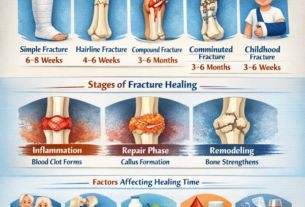
Delaying treatment can lead to bone misalignment, permanent joint stiffness, nerve damage, or poor healing. How Are Bone Fractures Diagnosed?An accurate diagnosis is the foundation of effective Bone Fracture Treatment in Navi Mumbai. Dr. Suyog Chavhan uses a structured diagnostic approach: Physical Examination: The doctor assesses the injury site for swelling, deformity, tenderness, and range of motion to get an initial understanding of the fracture. X-Ray: The most common and first-line imaging tool. X-rays clearly show the location and type of most fractures and help plan treatment. CT Scan (Computed Tomography): Used for complex or multi-fragment fractures, particularly around joints or the spine, where greater detail is needed than an X-ray provides. MRI (Magnetic Resonance Imaging): Ideal for detecting stress fractures, soft tissue injuries, and fractures not visible on X-rays. It provides the most detailed view of bone and surrounding tissue. How Long Does a Bone Fracture Take to Heal?Healing time varies based on the type, location, and severity of the fracture, as well as the patient’s age and overall health. General estimates are:
These are general timelines. Your orthopedic surgeon will provide a personalised healing plan based on your specific condition. How Are Fractures Treated?Non-Surgical Treatment: Most stable, simple fractures are managed with casting, splinting, or bracing. Rest and pain management are core components. Surgical Treatment: Complex or displaced fractures require internal fixation using plates, screws, rods, or pins to hold the bone correctly while it heals. Physical Therapy: After the bone heals, physiotherapy restores strength, flexibility, and range of motion. Skipping rehabilitation often leads to chronic stiffness and long-term weakness. Prevention Tips
Dr. Suyog Chavhan’s Expert Insight “Many patients mistake a fracture for a sprain and delay treatment by days or even weeks. Persistent pain, swelling, or difficulty moving a limb after an injury should always be evaluated by an orthopedic specialist. Early diagnosis is the single most important factor in achieving a complete and complication-free recovery.” Dr. Suyog Chavhan, Internationally Trained Orthopedic & Trauma Surgeon, Navi Mumbai Why Choose Dr. Suyog Chavhan for Bone Fracture Treatment in Navi Mumbai?For trusted Fracture Treatment, Dr. Suyog Chavhan is one of the most experienced and recommended specialists in the region. He is an internationally trained orthopedic and traumatology surgeon with advanced fellowship training in Complex Trauma from leading hospitals in Seoul, South Korea, and specialised training in joint replacements at top hospitals in England, United Kingdom. Associated with Kokilaben Dhirubhai Ambani Hospital and Zynova Shalby Hospital, Dr. Chavhan specialises in adult and paediatric fracture treatment, complex trauma surgery, and minimally invasive joint replacement. With nearly a decade of experience, he is known for precise diagnosis, advanced surgical techniques, and a patient-first approach that puts your recovery above everything else. Whether you are dealing with a simple wrist fracture in Vashi, a stress fracture in Kharghar, or a complex compound injury in Panvel or Belapur Dr. Suyog Chavhan delivers personalised Bone Fracture Treatment in Navi Mumbai designed for the fastest and safest possible recovery. Frequently Asked Questions (FAQs)
ConclusionBone fractures from hairline cracks to severe compound breaks all deserve prompt, expert medical attention. Ignoring or delaying treatment can turn a manageable injury into a long-term problem affecting your mobility and quality of life. With the right specialist and timely care, most fractures heal completely and successfully. If you or a loved one has suffered a bone injury, consult Dr. Suyog Chavhan for trusted Fracture Treatment in Navi Mumbai and take the first confident step toward a safe, complete recovery.
|