Hip pain can slowly start affecting your daily life. Simple activities like walking, climbing stairs, or getting up from a chair may become uncomfortable. Many people ignore these symptoms and continue managing the pain with medication or rest. However, when the hip joint becomes severely damaged, the discomfort may not improve without medical treatment.
If the pain continues for a long time and begins to limit your mobility, consulting a Hip Joint Replacement Surgeon in Navi Mumbai can help you understand the condition better and explore the right treatment options.
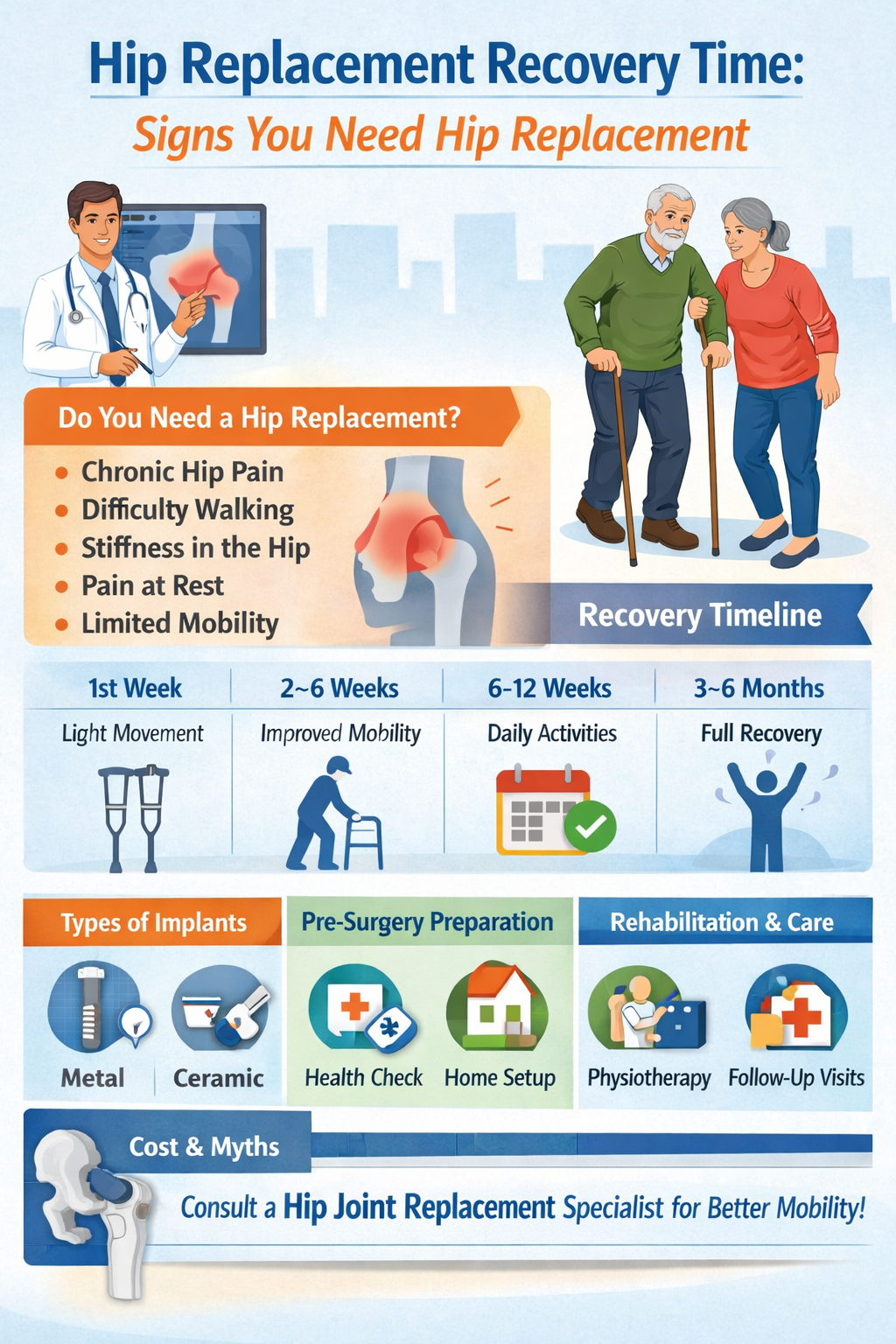
The recovery time after hip replacement surgery usually ranges between 6 to 12 weeks for most daily activities, while full recovery may take a few months. Early diagnosis, proper treatment, and rehabilitation can significantly improve mobility and reduce long-term pain.
Signs You Need Hip Joint Replacement
Recognizing the early signs of hip damage can help you seek timely treatment. Some common symptoms include:
-
Persistent pain in the hip or groin area
-
Difficulty walking or standing for long periods
-
Stiffness that limits movement
-
Pain that continues even while resting
-
Reduced quality of life due to limited mobility
If these symptoms start affecting your quality of life, seeking guidance from an experienced Hip Joint pain can help determine whether surgery or other treatments are suitable.
Hip Replacement Recovery Time
Understanding Hip replacement recovery time can help patients feel more confident about the treatment journey. Recovery happens gradually, and each stage helps restore strength and mobility.
First Week
Patients begin gentle movements and physiotherapy to improve circulation and reduce stiffness.
2–6 Weeks
Walking becomes easier with the help of physiotherapy and supportive devices if required.
6–12 Weeks
Many people return to normal activities such as walking independently and performing daily tasks.
3–6 Months
The hip joint becomes stronger and more stable, allowing patients to regain confidence in movement.
Following your doctor’s advice, maintaining regular exercises, and keeping a positive mindset can support a smooth recovery.
Types of Hip Replacement Implants
Hip replacement surgery involves replacing the damaged joint with an artificial implant. There are several types of implants used depending on the patient’s condition.
Common implant materials include:
-
Metal-on-polyethylene implants
-
Ceramic-on-ceramic implants
-
Ceramic-on-polyethylene implants
Each implant type is designed to provide durability, stability, and improved joint movement.
Preparing for Hip Replacement Surgery
Proper preparation helps ensure a safe and successful surgery.
Patients are usually advised to:
-
Undergo medical evaluations and diagnostic tests
-
Maintain a healthy diet to support recovery
-
Stop smoking or alcohol consumption if applicable
-
Arrange support at home for the recovery period
Preparing mentally and physically can make the surgical experience smoother and less stressful.
Post-Operative Care and Rehabilitation
Rehabilitation is an important part of recovery after hip replacement surgery.
Some key steps include:
-
Following physiotherapy exercises regularly
-
Avoiding high-impact activities during early recovery
-
Maintaining a balanced diet for bone health
-
Attending follow-up appointments with the doctor
Consistent rehabilitation helps improve joint strength and restore mobility gradually.
Anterior vs Posterior Hip Replacement Approaches
Orthopedic surgeons may use different surgical techniques based on the patient’s condition.
Anterior Approach
-
Surgery performed from the front of the hip
-
Less muscle disturbance
-
Often associated with faster recovery
Posterior Approach
-
Traditional surgical technique
-
Provides better visibility of the joint for the surgeon
-
Suitable for many complex cases
Both approaches aim to relieve pain and improve hip function.
Cost of Hip Replacement in Vashi
The cost of hip replacement surgery can vary depending on several factors, such as:
-
Type of implant used
-
Hospital facilities
-
Surgeon’s expertise
-
Diagnostic tests and rehabilitation services
Patients are encouraged to discuss the treatment plan and estimated expenses with their healthcare provider to understand the complete process.
Common Myths About Hip Replacement Surgery
Many people hesitate to consider Hip Joint Replacement in Vashi because of common misconceptions about the surgery.
Myth 1: Hip replacement is only for elderly patients.
Reality: People of different age groups may benefit if they have severe joint damage.
Myth 2: Recovery takes years.
Reality: Most patients recover within a few months with proper care.
Myth 3: You cannot return to normal activities.
Reality: Many patients regain mobility and return to active lifestyles.
Understanding the facts can help patients make confident treatment decisions.
Long-Term Outcomes After Hip joint Replacement in Vashi
Hip replacement surgery has helped millions of patients regain mobility and reduce chronic pain. With proper care and regular follow-up, artificial hip joints can last for many years.
Patients often experience:
-
Improved joint flexibility
-
Reduced pain during daily activities
-
Better balance and stability
-
Enhanced quality of life
Maintaining a healthy lifestyle and regular exercise supports long-term joint health.
Final Thought
Hip pain should never be ignored, especially when it begins to affect everyday life. Recognizing the warning signs early and seeking professional guidance can prevent complications and improve treatment outcomes. Consulting a qualified Hip Joint Replacement in Vashi can help you understand your condition and explore the most suitable treatment options for restoring mobility and comfort.