Knee pain is one of the most common complaints among adults, particularly after the age of 50. For many patients, the discomfort begins gradually a slight stiffness in the morning, mild swelling after a long walk, or mild aching after climbing stairs. Over time, however, these symptoms can become severe enough to interfere with everyday activities, sleep, and overall quality of life.
While most knee conditions can initially be managed with physiotherapy, medications, lifestyle changes, and joint injections, there are situations where these approaches no longer provide meaningful relief. When that happens, Knee Replacement in Navi Mumbai becomes a clinically appropriate and often life-changing solution.
Understanding the conditions that commonly lead to knee replacement surgery can help patients and their families make informed, confident decisions about their joint health.
What Is Knee Replacement Surgery?
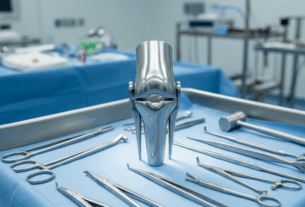
Knee replacement surgery, medically referred to as knee arthroplasty, is a procedure in which the damaged cartilage and bone surfaces of the knee joint are removed and replaced with precision-engineered artificial implants. These implants are designed to replicate the natural movement of the knee, relieving chronic pain and restoring functional mobility.
With advances in implant technology and surgical techniques, modern knee replacement procedures offer faster recovery, improved outcomes, and long-lasting results making them one of the most successful elective surgeries in orthopaedic medicine today.
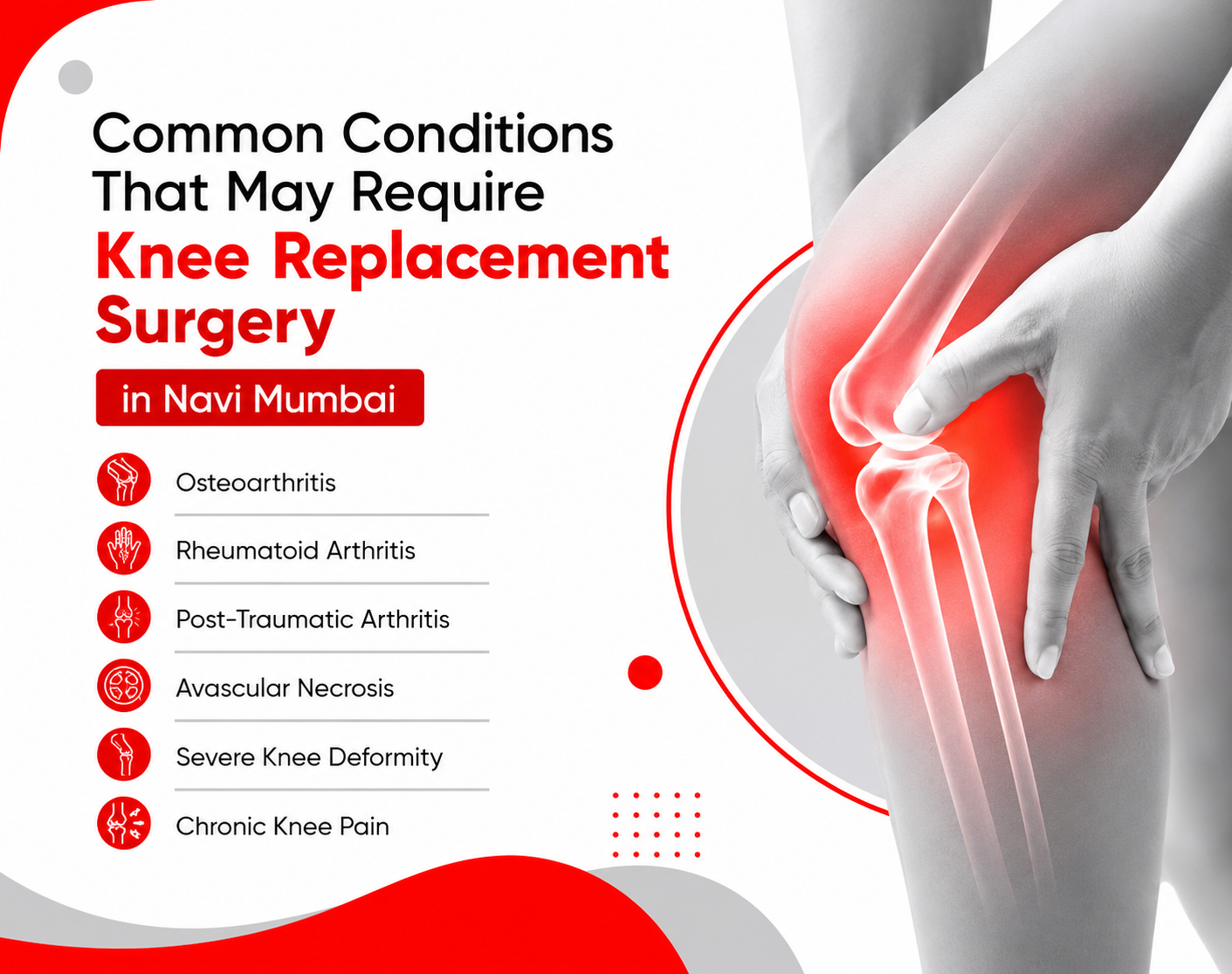
Conditions That Commonly Require Knee Replacement Surgery
- Osteoarthritis (Wear-and-Tear Arthritis)
Osteoarthritis is the single most common reason patients seek Knee Replacement in Navi Mumbai. This degenerative joint condition develops when the protective cartilage that cushions the knee gradually breaks down over time, causing bone-on-bone friction.
Patients typically experience persistent knee pain, morning stiffness, swelling around the joint, a grinding or clicking sensation during movement, and difficulty walking, climbing stairs, or rising from a seated position. Symptoms tend to worsen progressively and become increasingly resistant to medication and physiotherapy.
When conservative management fails to provide adequate relief over a sustained period, knee replacement surgery is often the most effective route to restoring mobility and eliminating chronic pain.
- Rheumatoid Arthritis
Unlike osteoarthritis, which results from mechanical wear, rheumatoid arthritis is an autoimmune condition. The body’s immune system mistakenly attacks the synovial lining of the joints, triggering persistent inflammation that gradually damages cartilage, bone, and surrounding soft tissue.
Patients with advanced rheumatoid arthritis may develop significant joint deformity, severe pain, and progressive loss of movement. When immunosuppressive medications and other treatments are no longer sufficient to control joint damage, Knee Replacement in Navi Mumbai offers a reliable option to restore joint function and improve quality of life.
- Post-Traumatic Arthritis
A previous knee injury whether a fracture, ligament tear, or meniscal damage can alter the mechanics of the joint and accelerate cartilage breakdown over the years that follow. This condition, known as post-traumatic arthritis, may not cause significant symptoms immediately after the initial injury, but can develop into a debilitating problem over time.
Patients often experience chronic pain, stiffness, reduced flexibility, and difficulty bearing weight on the affected leg. As joint damage progresses, knee replacement surgery may be necessary to repair the structural integrity of the joint and relieve ongoing discomfort.
- Severe Knee Deformity
Some patients develop structural deformities of the knee over time, including bow legs (varus deformity) or knock knees (valgus deformity). These conditions place asymmetric mechanical stress on the knee joint, causing uneven cartilage wear, increasing pain, and ultimately compromising the patient’s gait and posture.
When a deformity has progressed to the point where it significantly affects walking, balance, and everyday function, Knee Replacement in Navi Mumbai may be recommended to realign the joint, distribute load evenly, and restore normal movement.
- Avascular Necrosis of the Knee
Avascular necrosis also known as osteonecrosis occurs when the blood supply to the bone tissue within the knee is disrupted, leading to progressive bone death and joint collapse. This condition can be triggered by long-term steroid use, previous injuries, alcohol dependence, or certain systemic medical conditions.
As the bone structure deteriorates, patients experience worsening pain and reduced range of motion. Once joint collapse becomes significant, knee replacement surgery is often the most appropriate intervention to restore function and relieve pain.
- Chronic Knee Pain That Disrupts Daily Life
Not every patient who requires knee replacement has reached the end stage of a specific arthritic condition. In some cases, chronic, unrelenting knee pain that persistently interferes with daily living can independently justify surgical evaluation.
If knee pain prevents a patient from walking comfortably across a room, climbing a flight of stairs, sleeping through the night, or carrying out simple household tasks and conservative treatment has not provided lasting relief an orthopaedic surgeon may recommend a comprehensive evaluation to determine whether knee replacement is appropriate.
- Failure of Non-Surgical Treatments
Orthopaedic specialists always explore non-surgical treatment options before recommending surgery. Conservative approaches may include oral pain medications, physiotherapy, structured weight management, knee bracing, activity modification, corticosteroid injections, and hyaluronic acid (viscosupplementation) injections.
When these interventions have been appropriately tried and no longer provide adequate, sustained relief and when knee pain continues to limit the patient’s quality of life Knee Replacement in Navi Mumbai becomes the logical and clinically supported next step.
Warning Signs That Should Not Be Ignored
Many patients delay seeking an orthopaedic opinion because they assume knee pain is a natural consequence of ageing. However, persistent symptoms often indicate progressive joint damage that, if left untreated, may worsen over time and complicate future treatment.
Patients should seek specialist evaluation if they experience any of the following:
Knee pain lasting several months despite treatment, pain while at rest or during the night, persistent swelling that does not improve with standard care, difficulty walking even short distances, limited range of motion in the knee, joint instability or a sensation of the knee giving way, severe morning stiffness lasting beyond 30 minutes, difficulty getting up from a chair or low surface, and sleep disruption caused by knee pain.
Early consultation allows the orthopaedic surgeon to accurately diagnose the cause of pain, assess the extent of joint damage through imaging, and determine whether surgery is the appropriate course of action or whether non-surgical options are still viable.
Who Is a Suitable Candidate for Knee Replacement?
There is no single criterion that determines candidacy for knee replacement surgery. A thorough clinical evaluation is essential. However, patients are generally considered suitable candidates when conservative treatments have failed to provide relief, knee pain significantly restricts daily activities and independence, imaging such as X-rays confirms moderate to severe joint damage, persistent swelling and stiffness remain unresponsive to medication, and overall quality of life has substantially declined due to knee-related symptoms.
It is important to note that age alone is not a deciding factor. While knee replacement is more common among patients in their late 50s and 60s, younger patients with severe joint damage resulting from trauma, autoimmune conditions, or avascular necrosis may also be appropriate candidates depending on individual clinical findings and general health status.
Benefits of Timely Knee Replacement Surgery
When performed at the right stage, Knee Replacement in Navi Mumbai can deliver meaningful, long-lasting improvements across multiple dimensions of a patient’s life.
Key benefits include significant and sustained pain relief, improved range of motion and joint flexibility, better walking ability and endurance, greater independence in daily activities, improved sleep quality as nighttime pain resolves, a return to recreational activities and social engagement, and long-lasting functional outcomes with modern implant systems, which can often last 15 to 20 years or more with appropriate care.
Rehabilitation and structured post-operative physiotherapy play an important role in achieving the best possible outcomes after surgery. Patients who engage consistently with their recovery programme typically regain mobility faster and experience better long-term function.
Why Choose Dr. Suyog Chavhan for Knee Replacement in Navi Mumbai?
Selecting the right orthopaedic surgeon is one of the most important decisions a patient can make when considering knee replacement surgery. Dr. Suyog Chavhan brings a patient-first approach to orthopaedic care, combining thorough clinical evaluation with personalised treatment planning and evidence-based surgical technique.
Each patient receives a detailed assessment that considers not only imaging findings and clinical symptoms, but also lifestyle, activity goals, and overall health. The emphasis is on ensuring that every patient whether undergoing surgery or continuing with non-surgical management receives a treatment plan best suited to their individual needs and long-term well-being.
From the initial consultation through to surgery, rehabilitation, and recovery, Dr. Suyog Chavhan’s clinic provides end-to-end orthopaedic support designed to help patients regain mobility, reduce pain, and return to an active, fulfilling life.
Conclusion
Persistent knee pain is not something patients should simply accept or push through. When conditions such as osteoarthritis, rheumatoid arthritis, post-traumatic arthritis, severe deformity, or avascular necrosis progress to the point where conservative treatment is no longer effective, Knee Replacement in Navi Mumbai offers a proven, safe, and effective path to lasting relief.
The decision to pursue surgery is always guided by a thorough clinical evaluation, individual symptoms, and the patient’s overall health and goals. Consulting an experienced orthopaedic specialist at the right time can prevent further joint deterioration, improve long-term outcomes, and help patients regain the independence and mobility that chronic knee pain has taken from them.
If you or a family member has been struggling with persistent knee pain in Navi Mumbai or the surrounding areas, early consultation with Dr. Suyog Chavhan can provide the clarity and guidance needed to make the right treatment decision.
Frequently Asked Questions (FAQs)
- What is the most common condition requiring knee replacement surgery?
Osteoarthritis is the leading cause. It involves progressive cartilage breakdown within the knee joint, resulting in chronic pain, stiffness, and eventually significant functional limitation when left untreated. - Can knee replacement be avoided with early treatment?
In many cases, early and consistent non-surgical treatment including physiotherapy, weight management, and appropriate medications can delay the need for surgery. However, when these measures stop providing relief, knee replacement is often the most effective option. - Is knee replacement surgery only recommended for older patients?
No. While more common in patients above 55, younger individuals with severe joint damage from trauma, autoimmune arthritis, or avascular necrosis may also be appropriate candidates based on clinical evaluation. - How long do knee replacement implants last?
Modern implants can last 15 to 20 years or longer, depending on factors such as the patient’s activity level, body weight, implant type, and adherence to post-operative care guidelines. - When should I consult a specialist for knee pain?
If knee pain persists for several months, does not respond to standard treatments, and begins limiting your daily activities or sleep, it is advisable to consult an orthopaedic specialist for a comprehensive evaluation.