Playing sports, hitting the gym, or going for a morning run physical activity is one of the best things you can do for your health. But injuries are an unavoidable part of an active lifestyle. The real question most people struggle with is: Is this injury serious enough to see a doctor, or can I just rest it off at home?
Many athletes and fitness enthusiasts in Navi Mumbai make the mistake of ignoring early warning signs, hoping the pain will go away on its own. Sometimes it does. But often, untreated sports injuries lead to long-term damage, chronic pain, or even permanent loss of mobility. Knowing when to seek professional sports injury treatment in Navi Mumbai can make the difference between a fast recovery and a complicated one.
Why Sports Injuries Happen
Sports injuries are extremely common among people of all fitness levels from professional athletes to weekend cricket players. They typically occur due to three main reasons: overuse, sudden impact or accidents, and improper training techniques.
Overuse injuries develop gradually when the same muscles, tendons, or joints are stressed repeatedly without enough recovery time. Sudden injuries, on the other hand, happen in a single moment a wrong landing, a collision, or a sharp twist. Improper form during exercise or sport is another leading cause, especially among those who are just starting out.
Regardless of how the injury happens, the symptoms it produces are your body’s way of signalling that something is wrong.
7 Symptoms That Tell You It’s Time to See a Sports Injury Doctor
1. Pain That Does Not Go Away
It is normal to feel some muscle soreness after physical activity. However, if the pain is sharp, intense, and localised to one specific area or if it persists for more than two to three days even with rest it is a sign that something more serious may be going on. Pain that worsens with movement or at night should never be ignored.
2. Swelling Around a Joint or Muscle
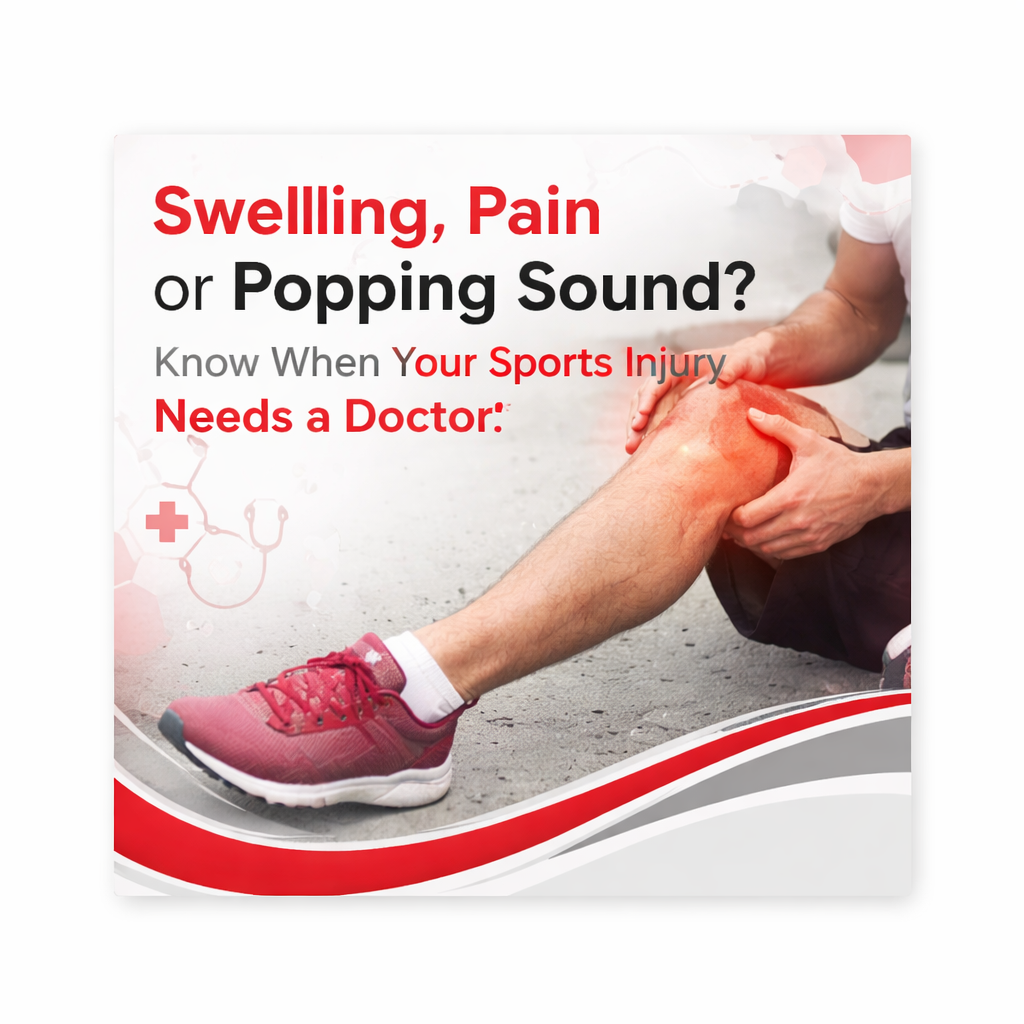
Swelling is one of the most visible signs of a sports injury. It occurs when fluid builds up in the tissues around the injured area as part of the body’s inflammatory response. Minor swelling that reduces within 24 hours may be manageable at home. But significant swelling that appears quickly after an injury, especially around the knee, ankle, or shoulder, often indicates a ligament tear, fracture, or dislocation that needs immediate medical attention.
3. A Popping or Crunching Sound
Did you hear a pop when you twisted your knee? Or a crunching sound in your shoulder while lifting? These sounds are serious red flags. A popping sound at the time of injury is one of the most common signs of a ligament rupture particularly an ACL (anterior cruciate ligament) tear in the knee. A crunching or grinding sound in a joint can indicate cartilage damage. If you heard any unusual sound during your injury, do not wait consult a sports injury specialist in Navi Mumbai as soon as possible.
4. Bruising That Spreads Quickly
Bruising occurs when blood vessels beneath the skin break due to trauma. A small bruise may be harmless, but if bruising appears rapidly and spreads over a large area, it could indicate a serious muscle tear or fracture. Deep bruising that does not fade within a week also warrants a doctor’s evaluation.
5. Reduced Range of Motion
If you are unable to fully bend your knee, lift your arm above your head, or rotate your ankle the way you normally can, your range of motion has been affected. This is a strong indicator of a joint injury, such as a sprain, dislocation, or tendon damage. Pushing through reduced mobility without treatment can make the injury significantly worse over time.
6. Weakness or Inability to Bear Weight
Can you walk normally after the injury? Can you grip or lift objects without pain? If a body part suddenly feels weak or you are unable to put weight on it, this is a critical sign that the injury may involve structural damage a fracture, torn ligament, or severe muscle strain. In such cases, rest alone is not enough and professional evaluation is essential.
7. Warmth, Redness, or Numbness
Localised warmth and redness around an injured area point to active inflammation, which may indicate tendonitis, bursitis, or an infection in more serious cases. Numbness or tingling sensations, especially after a head or neck injury, should be treated as a medical emergency. Numbness following a sports injury can suggest nerve compression or damage that needs prompt attention.
Common Sports Injuries That Require Medical Treatment
Understanding what type of injury you may have also helps you assess its seriousness. The most common sports injuries that require professional treatment include:
Sprains involve the overstretching or tearing of ligaments and are most common in the ankle, wrist, and knee. Grade 2 and Grade 3 sprains almost always need medical care.
Strains affect muscles or tendons and frequently occur in the hamstrings and lower back. Severe strains can involve partial or complete tears.
Fractures are cracks or complete breaks in the bone caused by high-impact collisions or falls. They require immediate imaging and treatment.
Dislocations occur when bones shift out of their normal position at a joint, most commonly in the shoulder or fingers. These must be treated by a doctor never try to pop a dislocated joint back yourself.
Tendonitis is inflammation of the tendons caused by repetitive motion, common in the elbow, knee, and shoulder. Without treatment it can become chronic.
Shin Splints cause pain along the shinbone and are frequent among runners, especially those training on hard surfaces. Continuing to run through shin splints can lead to stress fractures.
Concussions are brain injuries caused by head impacts and are common in contact sports like football and kabaddi. Dizziness, headache, confusion, or memory issues after a head injury must be evaluated immediately.
What to Do Immediately After a Sports Injury
Before you reach your doctor, follow the RICE method as first aid:
- Rest — Stop the activity immediately. Do not try to push through the pain.
- Ice — Apply ice wrapped in a cloth to the injured area for 15 to 20 minutes every few hours.
- Compression — Use a bandage to reduce swelling and provide support.
- Elevation — Keep the injured limb raised above heart level to reduce swelling.
The RICE method helps manage symptoms in the short term but is not a substitute for professional medical evaluation when the symptoms described above are present.
Why Professional Sports Injury Treatment in Navi Mumbai Matters
Self-treatment has its limits. A sports injury specialist brings advanced diagnostic tools including X-rays, MRI scans, and ultrasound to accurately identify the nature and severity of your injury. Without a proper diagnosis, you risk treating the wrong problem or returning to activity before you have fully healed.
Dr. Suyog B. Chavhan, a leading sports injury specialist in Navi Mumbai, provides personalised treatment plans that go beyond pain relief. His approach focuses on accurate diagnosis, targeted treatment, structured rehabilitation, and injury prevention guidance ensuring that patients not only recover fully but also return to their sport with reduced risk of re-injury.
Whether your injury involves a minor sprain or a complex ligament tear, Orthopaedics & Joint Replacement Clinic in Vashi, Navi Mumbai can dramatically improve your recovery outcome.